
A city’s sensory architecture, hospitality sequencing, and behavioral cues shape its retail environment, performance, and personality in ways that deserve close study and translation to local markets.
This piece is part of The Retailer Environment, a two-part series outlining those insights from Las Vegas, their relation to Florida markets, and how ICSC Orlando filled in the gaps to create a fuller picture of our local landscape.
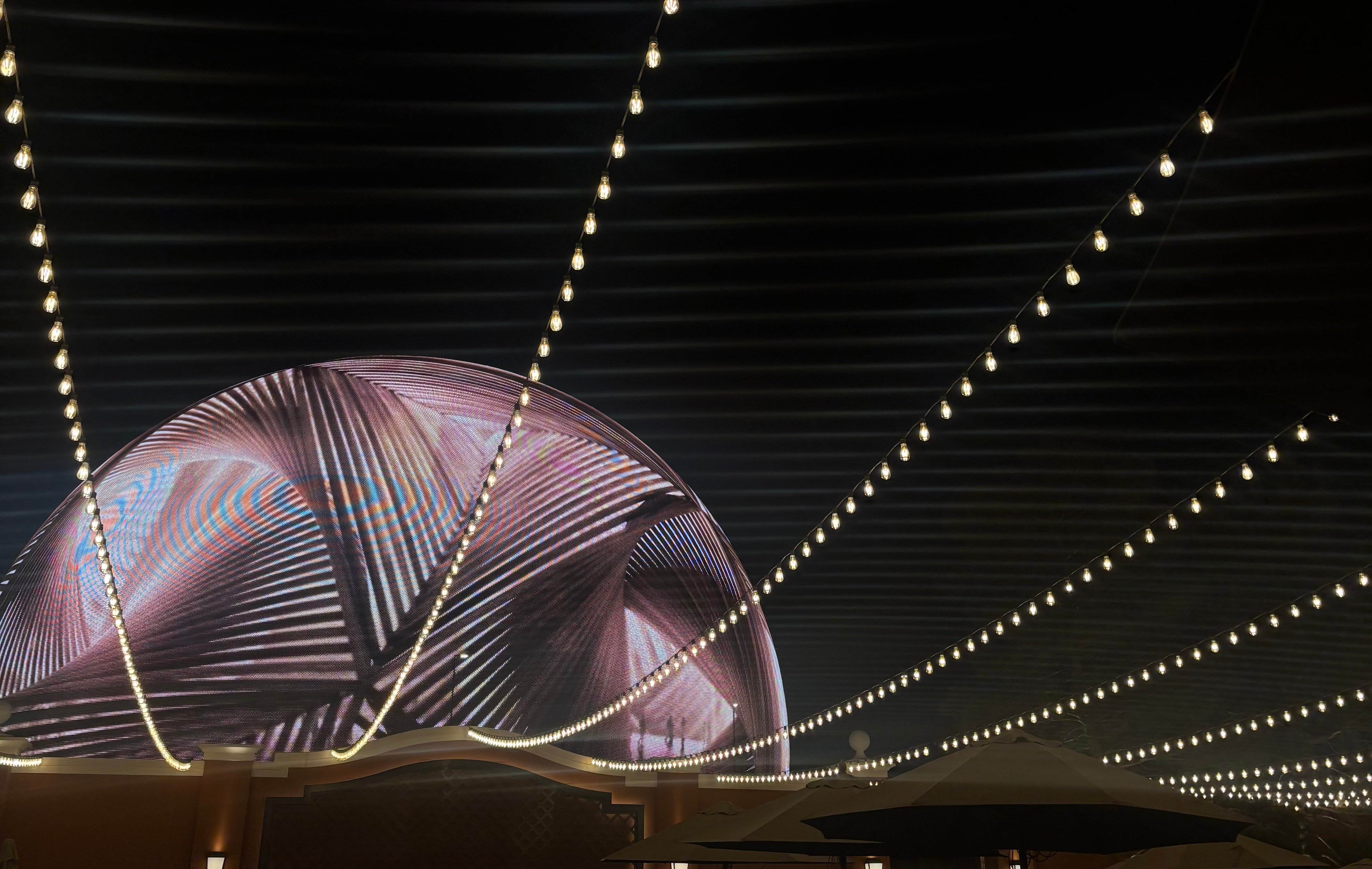
Wynn Las Vegas Patio, view of The Sphere
Series Takeaways
- Hospitality is a system and a strategy, not just a tenant category.
- Retail is entertainment and steers impression and purchasing behavior.
- 63% of consumers say experience is equally if not more important than product.
- Florida markets can better position experience, dwell time, storytelling, and conversion.
- Increased dwell time can see 38% higher sales.
- Improved design can see revenue growth +32% and total shareholder return +56%
Series Contents
I. Environmental Trends
Hospitality as the Anchor
Retail as Theater
Emotional Minimalism
II. Local Applications (FL)
Dwell Time is the KPI
Hospitality Anchors
Narrative & Design Convert
III. Development Strategy
Experience Language
Repositioning Underperforming Centers
Curating Tenant Mix to Behavior
I. Environmental Trends
Hospitality as the Anchor
Hospitality is no longer just adjacent to retail, it’s the system regulating pace, emotion, and dwell time. In Vegas, hospitality serves as an amenity and an engine.
-
-
-
- Hospitality zones slow movement and increase dwell time
- Bars and lounges create emotional gravity
- Food & Beverage act as a “reset” for overstimulated guests
- Hospitality integration increases perceived luxury
-
-
Florida’s retail centers are beginning to adopt this logic through micro-hospitality pockets: coffee shops, lounge seating, shaded outdoor zones. ICSC Orlando makes it clearer that the evolution of Florida retail will hinge on how effectively developers integrate hospitality into circulation, rather than treating it solely as a tenant category.
-
-
-
- Disney Springs, Orlando, uses F&B to drive circulation
- Park Avenue, Orlando, relies on micro-hospitality nodes and experiential status
- Lake Nona Town Center, Orlando, uses event-driven hospitality gravity
- Water Street and Hyde Park, Tampa, integrate retail-hospitality into outdoor pacing
-
-
Retail as Theater
Retail environments in Las Vegas aren’t just selling product, they’re staging controlled emotional choreography. The retail is treated as theater, and it's not more spectacle than it is sensory sequencing. These environmental cues are intentional, and every transition is engineered to move the guest through a pre-determined narrative.
-
-
-
- Lighting gradients act as emotional cues
- Material transitions create narrative beats
- Sound and scent function as environmental score
- Pace manipulation is embedded into every zone
-
-

This sequencing is the backbone of its retail performance. Spectacle sets the context, but sequencing controls the behavior. The environment tells you when to slow down, where to look, what to feel, and how much to spend. This is best and most obviously illustrated in the casinos:
-
-
-
- High sensory - high traffic - high conversion
- Micro-zones break up long corridors
- Lighting and sound regulate pace
- Retail acts as “breathing room” between playing zones
-
-

Guests spend money in the casinos, and as they leave, they pass through the surrounding shops. In one of the most actualized examples of retail, Vegas shows the category is becoming experiential scripting and thrives with increased dwell time. This trend will continue to travel top-down into the local markets where developers prioritize environmental performance over tenant churn.
Emotional Minimalism
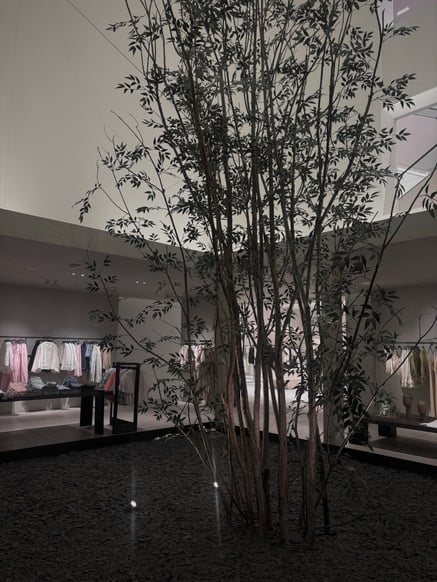 Luxury retail has shifted from maximalism to emotional minimalism, leaning into calm, intentional sensory restraint, which produces exclusivity as a result. In an age where everything can be mass produced for cheap, restraint communicated through high-quality materials and space signal luxury in a way that imitation cannot. It’s the basic quality over quantity equation. In overstimulated markets like Las Vegas and Florida’s tourism corridors, this restraint functions as a counter-stimulus strategy, a deliberate emotional interruption designed to regulate psychological bandwidth.
Walk into any store in Vegas, and you will be met with bright colors and patterns, flashing light displays, product layered top to bottom and left to right. It will feel like Vegas, and therefore indistinguishable from every other store and experience in the city.
Walk into a luxury store in Vegas, and you will be greeted with a limited neutral color palette with select accents, higher ceilings, soft uplighting, a strictly organized product display, and a sales associate asking if you would like assistance.
This interrupts the overwhelm and shocks the system to trigger a feeling of peace and personalized care, allowing the breathing room for higher sales to be made. And when the brain processes its surroundings, recognizing the validating cues of quality and the desire sparked by its louder stimulating environment outside, it converts that emotional state into purchasing behavior.
-
-
-
- Low-density merchandising reduces cognitive load
- Soft lighting increases perceived value
- Material restraint signals confidence
- Calm environments convert overstimulated customers
-
-

Visual minimalism creates emotional minimalism. This is a behavioral strategy, not just an aesthetic. It’s a form of environmental regulation, a way to control pace, attention, and emotional bandwidth in markets defined by sensory noise, allowing luxury environments to feel elevated, exclusive, and psychologically safe.
With ICSC Orlando functioning as one of the “Big 3” association conferences, we can already draw the comparisons in behavioral conditions: noise, density, tourism, and constant stimulation. However, we see far fewer environments here using calm, material-driven minimalism as a conversion strategy. Seeing these two markets back-to-back makes the pattern hard to miss, and points to a regional opportunity for Florida operators to capitalize on higher discretionary spending in the submarkets that will support it.
Continue reading in Part 2 about how these trends are influencing Florida Applications and Development Strategy